
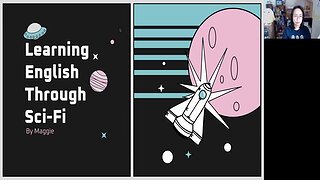
Intro
- 課程形式
- 線上
- 課程名稱
- 從科幻作品中學英文
- 課程編號
- 1343
- 課程期間
- 2025-11-13 ~
- 老師
- 廖珮雯 (城發系)
- 課程類別
- 英語
- 時數
- 18 (小時)
- 修課人數
- 12
- 標籤
- 語言養成, 職涯輔導, 素養提升
- 簡介
- (於114-2學期以後,學期內完成課程修畢,即可認抵通識課程微學分1學分) (詳細時間及申請流程將公告於通識中心網頁)*通過本課程可計陽光幼苗自主學習活動15次,課程若有兩種以上類型,僅能擇一類型申請。*重要提醒!!!「陽光幼苗自主學習活動」及「通識課程微學分」,僅能擇一採認!一、課程名稱: 從科幻作品中學英文 Learning English Through Sci-Fi(□實體授課 ■線上教學)
二、開課類別:□資訊及程式相關課程 ■考核之相關課程 □EMI課程
(此3項無則免勾選)
□講座 □展演 □實作 ■工作坊
(此4項務請至少擇1勾選)三、開課學年度: 114 學年度第 2 學期 (■常年開設)
四、基本資料:
(一) 總授課時數: 18 小時( 9或18小時)
(二) 授予學分數: 1 學分(0.5或1學分)
(三) 學分認抵領域:通識-共同選修
(四) 招生人數:無上限
(五) 開課單位(學分認抵單位):通識教育中心
(六) 協同開課單位: ■教發發展中心
(七) 備註:(可填寫課程時間、報名方式、報名時間、錄取公告方式等事項)
五、 課程介紹(課程宗旨、先備知識等):
This 18-hour course invites students to explore English through the imaginative world of science fiction. From time travel to artificial intelligence, from dystopian societies to alien encounters, each lesson uses iconic films and stories to build language skills in context. Students will be introduced to iconic scenes, dialogues, and descriptions to learn useful sentence structures, key vocabulary, and expressions for discussing ideas. They will also practice summarizing works and reflecting on their cultural significance. How science fiction mirrors our hopes, fears, and questions about what it means to be human. By the end of the course, students will not only improve their English fluency but also gain a deeper appreciation for the stories that shape our vision of the future.
這門 18 小時的課程將帶領學生進入充滿想像力的科幻世界,透過經典電影與故事來學習英文。從時間旅行到人工智慧,從反烏托邦社會到外星生命,每一堂課都以代表性的作品為核心,幫助學生在語境中學習實用的句型、關鍵字彙與表達方式。課程同時培養學生撰寫作品摘要、描述情節與人物的能力,並思考這些故事在文化上的意義——科幻如何反映我們對未來的期盼、恐懼,以及對「人性」的提問。課程結束後,學生不僅能提升英文的理解與運用能力,也能更深刻地欣賞那些塑造我們未來想像的經典故事。
六、 課程目標:
1.Understand and use key sentence structures commonly found in film dialogues and narrative descriptions.
2.Expand vocabulary and useful expressions related to science fiction themes such as time, memory, technology, and society.
3.Write clear and concise summaries of stories, scenes, or characters, expressing ideas in organized paragraphs.
4.Discuss cultural and philosophical ideas reflected in science fiction, including identity, ethics, and human nature.
5.Develop listening and speaking skills through guided viewing, note-taking, and writing activities.
(一) 理解並運用句型結構,掌握電影對話與敘事描述中常見的語言形式。
(二) 擴充字彙與實用表達,涵蓋時間、記憶、科技與社會等科幻主題。
(三) 撰寫清楚有條理的摘要,能以段落形式表達對故事、場景或角色的理解。
(四) 探討科幻作品中的文化與哲學議題,如身分認同、倫理與人性的思考。
(五) 培養聽力與口說能力,透過影片觀賞、筆記與寫作練習等活動加強語言運用。
七、 授課教師: 廖珮雯
八、 與通識基本素養之關聯性:■公民涵養 □自然生態 □藝術美學
□資訊科技 □健康樂群 □人文反思
一、 課程進度:
課程日期/
時間
授課教師
課程次別
上課內容/主題
時數
預計114學年度第2學期起,開放於線上平台給學生學習。
廖珮雯
1
Introduction 介紹課程、結構
每單元課程內容(將依不同作品內容微調):
1. 介紹主題
2. 介紹作品(劇情、內容和主題的關聯性、作品內包含的引用、文化歷史上的重要意涵)
3. 介紹重要場景中的對話
4. 認識單字和句型
5. 學習此單字句型可以在什麼其他情境使用(以其他相關作品中的對話為例)
6. 介紹同類型可參考的其他作品
30 mins
2
Theme 1: Time Travel: Back to the Future
主題一:時空旅行:《回到未來》
1hr
3
Theme 1: Time Travel: Primer
主題一:時空旅行:《迴轉時光機》
1hr
4
Theme 2: Memory and Identity: Blade Runner
主題二:記憶與身份:《銀翼殺手》
1hr
8
Theme 2: Memory and Identity: Total Recall
主題二:記憶與身份:《攔截記憶碼》
1hr
6
Theme 3: AI and Humanity: Her
主題三:人工智慧:《雲端情人》
1hr
7
Theme 3: AI and Humanity: The Matrix
主題三:人工智慧:《駭客任務》
1hr
8
Theme 4: Dystopian future: The Hunger Games
主題四:反烏托邦:《飢餓遊戲》
1hr
9
Theme 4: Dystopian future: Children of Men
主題四:反烏托邦:《人類之子》
1hr
10
Theme 5: Aliens and the Others: Arrival
主題五:外星人/他者:《異星入境》
1hr
11
Theme 5: Aliens and the Others: Men in Black
主題五:外星人/他者:《MIB星際戰警》
1hr
12
Theme 6: Space Opera: Star Trek
主題六:宇宙史詩:《星際爭霸戰》
1hr
13
Theme 6: Space Opera: The Fifth Element
主題六:宇宙史詩:《第五元素》
1hr
14
Theme 7: Monsters: Godzilla
主題七:怪物:《哥吉拉》
1hr
15
Theme 7: Monsters: Pacific Rim
主題七:怪物:《環太平洋》
1hr
16
Theme 8: Cyberpunk: Akira
主題八:賽博龐克:《阿基拉》
1hr
17
Theme 8: Cyberpunk: Ghost in the Shell
主題八:賽博龐克:《攻殼機動隊》
1hr
18
Theme 9: The Birth of Science Fiction: Frankenstein
主題九:科幻的起源:《科學怪人》
1hr
19
Final Review 總結
30 mins
18hr
二、 評量方式:
完成觀看影片、課後測驗達60分及格通過。三、 使用教材:
教師製作投影片(內容包含:單字、句型、介紹作品及其文學、文化上的影響介紹)、電影作品對話摘錄、每章節後單字句型測驗。
Besson, L. (Director). (1997). The Fifth Element [Film]. Columbia Pictures.
Carruth, S. (Director). (2004). Primer [Film]. THINKFilm.
Cuarón, A. (Director). (2006). Children of Men [Film]. Universal Pictures.
Del Toro, G. (Director). (2013). Pacific Rim [Film]. Warner Bros. Pictures.
Gale, R. Z. (Director). (1985). Back to the Future [Film]. Universal Pictures.
Honda, I. (Director). (1954). Godzilla [Film]. Toho Company.
Jonze, S. (Director). (2013). Her [Film]. Warner Bros. Pictures.
Meyer, N. (Director). (1982). Star Trek II: The Wrath of Khan [Film]. Paramount Pictures.
Ōtomo, K. (Director). (1988). Akira [Film]. Toho Company.
Ross, G. (Director). (2012). The Hunger Games [Film]. Lionsgate.
Scott, R. (Director). (1982). Blade Runner [Film]. Warner Bros. Pictures.
Shelley, M. W. (1818). Frankenstein; or, The modern Prometheus. Lackington, Hughes, Harding, Mavor & Jones.
Sonnenfeld, B. (Director). (1997). Men in Black [Film]. Columbia Pictures.
Villeneuve, D. (Director). (2016). Arrival [Film]. Paramount Pictures.
Wachowski, L., & Wachowski, L. (Directors). (1999). The Matrix [Film]. Warner Bros. Pictures.
Wiseman, L. (Director). (2012). Total Recall [Film]. Columbia Pictures.
Oshii, M. (Director). (1995). Ghost in the Shell [Film]. Production I.G.
- 報名期間
- 開始: 2026-03-02
- 總人數限制
- 無限制
- 承辦人
- 李佳穎 / 教學發展中心 (電子郵件: ying0223@utaipei.edu.tw)廖珮雯 / 其他個人講師
- 開課單位
- 教學發展中心
- 課程 QR code
報名資訊
其他資訊
課程教材
- 1.
- 1.115:25Part 1
- 1.223:58Part 2
- 1.3Sci-Fi English -1
- 2.Time Travel
- 2.130:17Back to the Future Part 1
- 2.225:50Back to the Future Part 2
- 2.322:24Back to the Future Part 3
- 2.4Sci-Fi English -2 Back to the Future
- 2.5Back to the Future: Quiz
- 2.629:32Primer Part 1
- 2.721:55Primer Part 2
- 2.827:24Primer Part 3
- 2.9Sci-Fi English -3 Primer
- 2.10Primer: Quiz
- 2.11Writing Practice (1)
- 3.Memory and Identity
- 3.121:41Blade Runner Part 1
- 3.225:36Blade Runner Part 2
- 3.331:14Blade Runner Part 3
- 3.404:15Blade Runner Part 4
- 3.5Sci-Fi English -4 Blade Runner
- 3.6Blade Runner: Quiz
- 3.726:52Total Recall Part 1
- 3.824:25Total Recall Part 2
- 3.920:22Total Recall Part 3
- 3.10Sci-Fi English -5 Total Recall
- 3.11Total Recall: Quiz
- 3.12Writing Practice (2)
- 4.AI and Humanity
- 4.119:14I, Robot Part 1
- 4.224:50I, Robot Part 2
- 4.314:10I, Robot Part 3
- 4.4Sci-Fi English -6 I, Robot
- 4.5I, Robot: Quiz
- 4.615:06Ex Machina Part 1
- 4.717:24Ex Machina Part 2
- 4.832:14Ex Machina Part 3
- 4.9Sci-Fi English -7 Ex Machina
- 4.10Ex Machina: Quiz
- 4.11Writing Practice (3)
- 5.Dystopian Future
- 5.112:40Brazil Part 1
- 5.212:57Brazil Part 2
- 5.320:08Brazil Part 3
- 5.4Sci-Fi English -8 Brazil
- 5.5Brazil: Quiz
- 5.622:10The Matrix Part 1
- 5.713:06The Matrix Part 2
- 5.820:33The Matrix Part 3
- 5.9Sci-Fi English -9 The Matrix
- 5.10The Matrix: Quiz
- 5.11Writing Practice (4)
- 6.Aliens and the Other
- 6.116:35Arrival Part 1
- 6.217:48Arrival Part 2
- 6.323:37Arrival Part 3
- 6.4Sci-Fi English -10 Arrival
- 6.5Arrival: Quiz
- 6.615:40Men in Black Part 1
- 6.718:27Men in Black Part 2
- 6.816:30Men in Black Part 3
- 6.9Sci-Fi English -11 Men in Black
- 6.10Men in Black: Quiz
- 6.11Writing Practice (5)
- 7.Space Opera
- 7.126:18Star Trek Part 1
- 7.215:24Star Trek Part 2
- 7.315:55Star Trek Part 3
- 7.420:16Star Trek Part 4
- 7.5Sci-Fi English -12 Star Trek
- 7.6Star Trek: Quiz
- 7.730:55Star Wars Part 1
- 7.819:04Star Wars Part 2
- 7.922:55Star Wars Part 3
- 7.10Sci-Fi English -13 Star Wars
- 7.11Star Wars: Quiz
- 7.12Writing Practice (6)
- 8.Monsters
- 8.120:00Godzilla Part 1
- 8.220:24Godzilla Part 2
- 8.315:12Godzilla Part 3
- 8.4Sci-Fi English -14 Godzilla
- 8.5Gozilla: Quiz
- 8.612:56Pacific Rim Part 1
- 8.723:31Pacific Rim Part 2
- 8.825:19Pacific Rim Part 3
- 8.9Sci-Fi English -15 Pacific Rim
- 8.10Pacific Rim: Quiz
- 8.11Writing Practice (7)
- 9.Cyberpunk
- 9.130:16Akira Part 1
- 9.210:30Akira Part 2
- 9.3Sci-Fi English -16 Akira
- 9.4Akira: Quiz
- 9.525:14Ghost in the Shell Part 1
- 9.620:32Ghost in the Shell Part 2
- 9.705:12Ghost in the Shell Part 3
- 9.8Ghost in the Shell: Quiz
- 9.9Sci-Fi English -17 Ghost in the Shell
- 9.10Writing Practice (8)
- 10.The Birth of Science Fiction
- 10.115:07Frankenstein Part 1
- 10.220:08Frankenstein Part 3
- 10.318:45Frankenstein Part 2
- 10.4Sci-Fi English -18 Frankenstein
- 10.5Frankenstein: Quiz
- 11.Final Review
- 11.108:29Outro
- 12.課程滿意度問卷 (線上)
- 13.講者滿意度問卷 (線上)